US President Donald Trump warned that no American city would be exempt from federal intervention as he called out Chicago for rising crime.

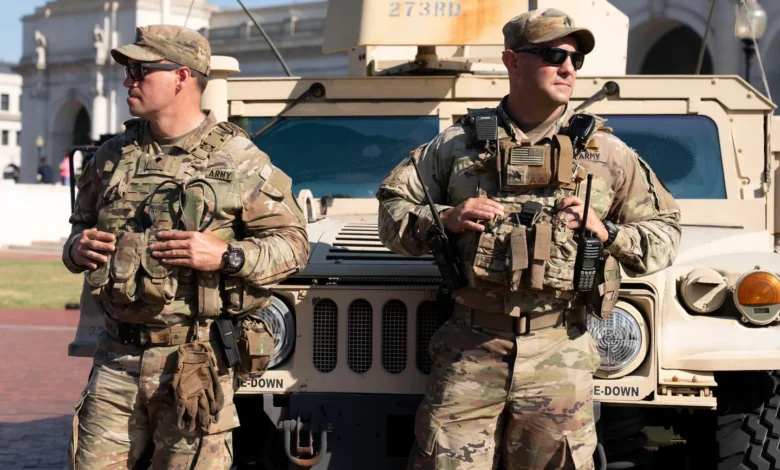
As the National Guard prepares for deployment to Chicago, the city, long celebrated for its resilience, braces for what could become a national showdown.
US President Donald Trump appears set to make Chicago the focal point of his sweeping “anti-crime” campaign, following previous National Guard deployments to Washington, DC, and Los Angeles. Trump described Chicago as “a mess,” blaming what he called failed Democratic leadership for the city’s challenges, and hinted that the city could be next for a federal crackdown.
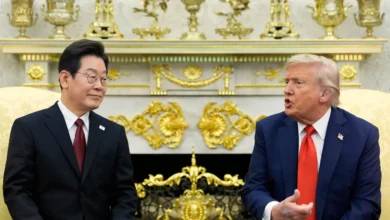
“You have an incompetent mayor. Grossly incompetent,” Trump told reporters at the White House. “And we’ll straighten that one out probably next. That’ll be our next one after this. And it won’t even be tough.” His remarks came as he signed an executive order eliminating no-cash bail in Washington, DC, underscoring his expanding confrontation with Democratic-led cities.
Chicago Mayor Brandon Johnson called the planned deployment “uncoordinated, uncalled-for and unsound,” emphasizing that the National Guard should not be used to occupy American cities. Governor JB Pritzker accused the president of “manufacturing a crisis” and preparing an unconstitutional overreach. Pritzker and Attorney General Kwame Raoul are reportedly preparing a legal challenge.
Pentagon officials are said to be readying up to 1,700 Guard troops to assist in federal crackdowns on “crime and immigration,” following a model used in Los Angeles and Washington. Critics note that Chicago’s crime rates have improved, with homicides dropping 8 percent in 2024, suggesting the intervention may be politically motivated. Former mayor Rahm Emanuel said the plan targets “welcoming cities, sanctuary cities,” rather than addressing crime.
Some conservative groups in Chicago support the federal presence, arguing it could help control gang violence, while many residents fear militarization could inflame tensions, particularly in immigrant communities. On Capitol Hill, Democrats decried the move as “political theater,” with House Minority Leader Hakeem Jeffries warning that the deployment puts Americans’ lives at risk.
Trump’s allies frame the move as decisive law-and-order leadership, while opponents see it as a dangerous precedent, potentially turning US cities into stages for political confrontation.
Chicago, once proud of its sanctuary city identity, now faces the prospect of federal troops patrolling its streets. The standoff highlights the tension between national authority and local governance, placing Chicago at the center of a contentious debate over crime, politics, and federal power.
As the National Guard prepares to move in, the city watches closely, aware that its streets may become the front line of America’s escalating domestic policy battle.