Syria rejects normalization with Israel, will not join Abraham Accords, says Al Sharaa

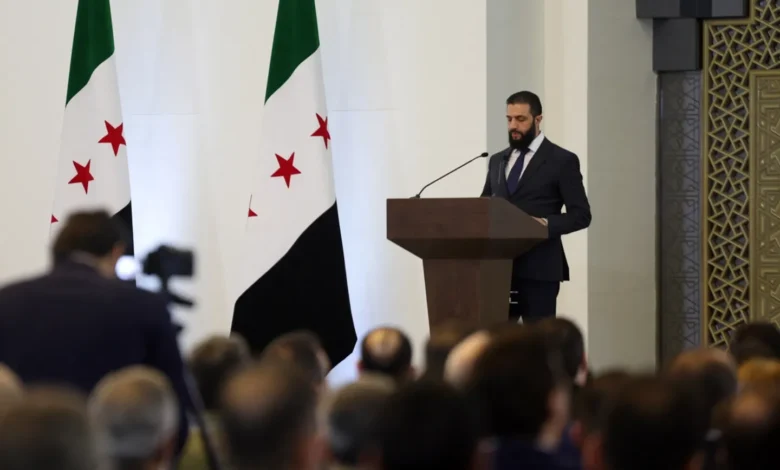
Ahead of his September debut at the UN, Syrian President Ahmed al Sharaa has made clear that Damascus will not join the Abraham Accords, citing Syria’s unique conflict with Israel as fundamentally different from that of other Arab states.
In an interview with Saudi magazine Al-Majalla, al Sharaa said Syria’s foreign policy focuses on maintaining “zero problems” with neighboring countries, but stressed that normalization with Israel is off the table. “The accords were signed with states that had no occupied land or direct conflicts with Israel. Syria’s situation is different; we have the Golan Heights under occupation,” he explained.
The Abraham Accords, brokered by the United States during President Donald Trump’s first term in 2020, normalized ties between Israel and the UAE, Bahrain, Sudan, and Morocco. Al Sharaa emphasized that Damascus’ priority is to revive the 1974 UN-brokered Disengagement Agreement or establish a similar framework to stabilize southern Syria under international supervision.
He highlighted his upcoming attendance at the UN General Assembly in New York—the first by a Syrian president since 1967—as a sign of Syria’s gradual reintegration into global diplomacy. “This participation is itself a message that Syria is no longer in isolation,” al Sharaa said, noting improved relations with the US, Türkiye, Saudi Arabia, the UAE, Qatar, and European nations.
Focusing on regional stability rather than confrontation, he added: “Our strategy is to defuse tensions, resolve disputes, and prioritize reconstruction. Syria will not be dragged into wars.” He also stressed the need for a “zero-problems approach” across the Middle East and said the country seeks to demonstrate stability through economic recovery and inclusive governance.
Al Sharaa pointed out that Syria’s new transitional government, formed after Bashar al Assad fled to Russia last December, sends a message to neighboring countries: “I reject sectarian quotas. We want participation and shared responsibility in governing the country, and above all, the promotion of citizenship.”