Arrest in Italy of Ukrainian man revives debate over Nord Stream sabotage

The development comes as Kiev pushes for long-term security assurances from Europe.
Did Ukraine blow up Nord Stream? Italy’s detention of Ukrainian man rekindles suspicions
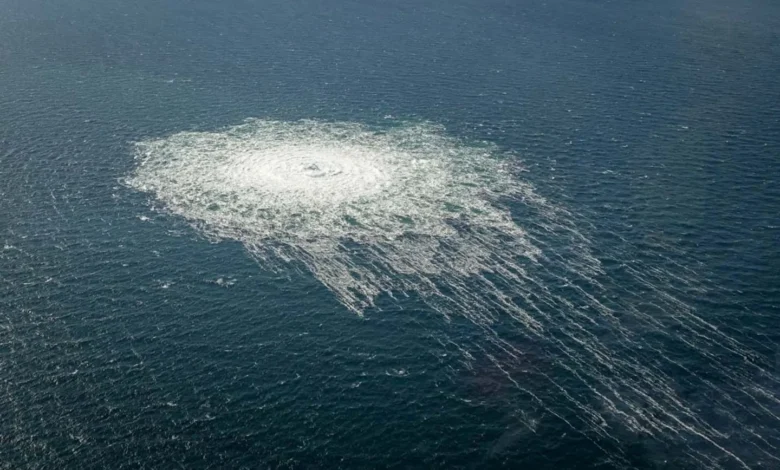
Gas bubbling from the Nord Stream 2 rupture disturbs more than a kilometre of sea near Bornholm, Denmark, September 27, 2022. / Reuters
31 minutes ago
Italian authorities have detained a Ukrainian national accused of helping coordinate the sabotage of the Nord Stream pipelines, Germany’s federal prosecutor announced Thursday, saying he would be transferred to face a German judge.
The suspect, identified as Serhii K. in line with German privacy law, belonged to a sabotage team that planted explosives along the undersea pipelines near Bornholm island, prosecutors stated.
He is alleged to have been among the main organisers of the covert attack, according to the statement.
The Nord Stream 1 and 2 projects, worth billions, carried Russian gas to Europe via the Baltic Sea until they were ruptured by explosions in September 2022 — seven months after Moscow launched its full-scale assault on Ukraine.
Prior to the war, European energy needs were largely met by Russian gas, making the pipeline blasts a key factor fuelling concerns of an energy crisis across the continent.
Prosecutors said Serhii K. and accomplices had departed from the German port of Rostock aboard a yacht to carry out the operation.
The boat had been leased from a local charter company using falsified IDs and middlemen, according to the official statement.
German outlets reported investigators traced the act to a Ukrainian unit of five men and one woman, who had rented the yacht Andromeda in Rostock before carrying out the sabotage.
Background: the Ukrainian angle
Speculation of Ukrainian involvement first went public in March 2023, when The New York Times cited US intelligence suggesting a pro-Ukrainian group had orchestrated the sabotage.
At that time, Kiev was lobbying Western allies to speed up deliveries of advanced weapons as the conflict entered its second year.
How did Ukraine’s partners react back then?
When the NYT story broke, Western capitals avoided premature judgments.
“There are ongoing national investigations, and it’s right to wait until they’re finished before making conclusions about responsibility,” NATO chief Jens Stoltenberg said at the time.
The blasts prompted a storm of competing claims: some Western officials speculated Moscow had destroyed its own pipelines, while Russia blamed the US, UK, and Ukraine.
Why is the arrest’s timing significant?
The capture of Serhii K. comes amid renewed diplomacy on Ukraine’s future security.
Kiev is pressing allies for binding defence guarantees, while Moscow refuses direct talks.
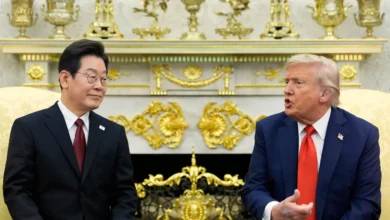
This week, top-level meetings in Washington brought together Ukrainian President Volodymyr Zelenskyy, former US President Donald Trump, and European leaders, centred on aid commitments and long-term security assurances.
Russia has accused Kiev of shunning peace efforts, claiming Ukraine’s security demands clash with Moscow’s conditions.
The Kremlin has dismissed the possibility of a near-term Putin–Zelenskyy summit and insists any security framework must involve Russia.
Could this shift the dynamics?
Whether the arrest — or eventual confirmation of Ukrainian responsibility — alters the geopolitical equation remains unclear.
When the NYT first floated the pro-Ukrainian theory in 2023, it emphasised there was no evidence directly linking President Zelenskyy or top officials to the blasts.
At the time, then-defence minister Oleksii Reznikov dismissed the reporting as “strange” and unrelated to Ukraine’s government.
He quipped it was “almost like a compliment to our special forces,” but stressed, “this is not our operation.”
Reznikov also said he had no concern that the speculation would weaken Western backing for Ukraine.