What does Wang Yi’s trip to India reveal about shifting alliances in the wake of Trump’s tariff turmoil?

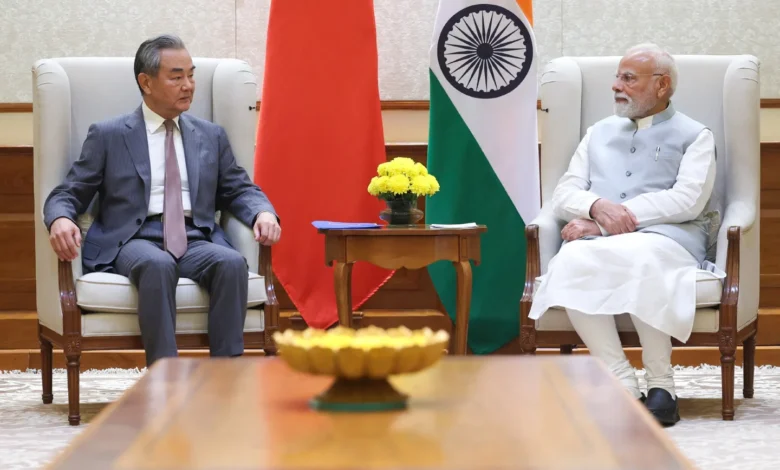
Chinese Foreign Minister’s trip to India yields progress on border, trade, and rare earth cooperation, with analysts calling it a strategic thaw reshaping Asia’s major economies and military powers.
Share
What does Wang Yi’s visit to India signal about shifting alignments amid Trump’s tariff shockwaves?
Chinese Foreign Minister Wang Yi wrapped up his first visit to New Delhi in three years on Tuesday, marking the most significant easing of tensions since the deadly Galwan Valley clash in June 2020.
Widely seen as a reaction to US President Donald Trump’s disruptive trade and foreign policy moves — including a 50 percent tariff on Indian exports over Russian oil purchases — the visit underscored Beijing and New Delhi’s intent to reset ties.
Over August 18–20, Wang met Prime Minister Narendra Modi, External Affairs Minister S. Jaishankar, and National Security Advisor Ajit Doval, while also co-chairing the 24th round of boundary negotiations.
The two nations announced key steps: the resumption of direct flights suspended during the pandemic, the reopening of cross-border trade, and China’s removal of export curbs on rare earths and fertilisers.
Former Indian diplomat Anil Wadhwa called the meetings “substantive,” highlighting progress from disengagement talks to cooperation on rivers and critical supplies. Modi hailed the outcomes as a boost to “regional and global peace and prosperity,” while Wang Yi emphasised China and India’s shared responsibility as Asia’s leading civilisations and developing nations.
At the boundary talks, both sides agreed to an “early harvest” approach — resolving simpler disputes first — and to set up an expert group on delimitation. Analysts see this as cautious but notable progress.
“Whether on disengagement, reopening trade, or rare earth supplies, these moves reflect genuine forward momentum,” said Wadhwa. Yet US scholar Josef Gregory Mahoney cautioned against overstatement, calling it “a bold trust-building step” but far from a breakthrough.