Archaeologists dig deeper at ancient Troy in Türkiye, seeking relics linked to the Trojan War legend

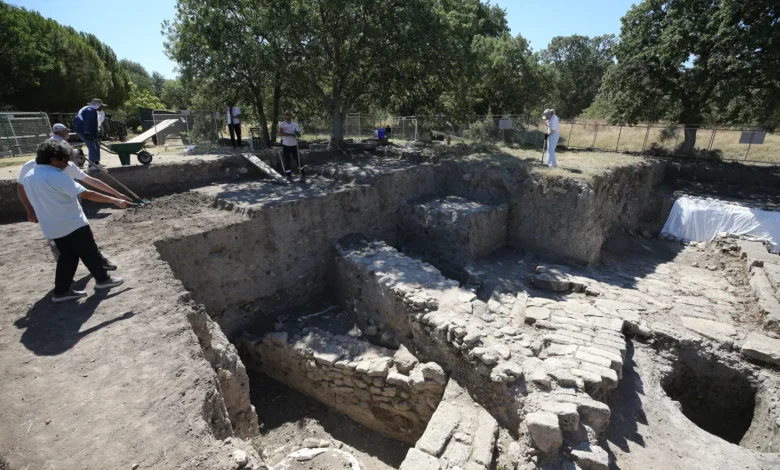
Archaeologists at ancient Troy dig for new evidence of the Trojan War’s legendary battles
Excavations at the ancient site of Troy in northwestern Türkiye are once again drawing global attention, as archaeologists intensify efforts to uncover artefacts tied to the mythic Trojan War. The sprawling site, a UNESCO World Heritage location with a history stretching back over 5,000 years, remains one of the world’s most captivating archaeological puzzles.
This year’s excavation season, carried out under the “Legacy for the Future Project,” is led by archaeologist and academic Rustem Aslan. Supported by Türkiye’s Ministry of Culture and Tourism and backed by Istanbul Steel and Iron Industries (ICDAS), the project also involves local partners such as the Governorship of Canakkale and Canakkale Onsekiz Mart University.
Focusing on Troy’s war-torn layers
The team’s main goal is to reach the destruction layers from the Late Bronze Age — roughly 1200 BC — widely believed to align with the period of the Trojan War described by Homer. Already, their efforts have unearthed intriguing finds: 3,500-year-old sling stones discovered near what was once a palace in the Troy 6 settlement phase, offering fresh clues into Bronze Age combat tactics.
“These stones were important offensive and defensive weapons of the era,” Aslan noted, explaining how their location points to the area’s strategic use in conflict.
The archaeologists are now expanding their search, hoping to uncover additional signs of devastation such as burnt remains, weapons lodged in charred layers, and hastily buried skeletons — the unmistakable traces of wartime destruction. “We believe more remarkable discoveries await us as the season progresses,” Aslan said.
A site layered with history
Troy is a multi-layered archaeological mound where remnants from successive civilizations lie stacked atop one another. Earlier digs have revealed Roman-era skeletons and artefacts from various later occupations, highlighting the site’s continuous importance through millennia.
Formal exploration at Troy began in the 19th century with Frank Calvert and gained fame through Heinrich Schliemann’s excavations starting in 1871. Later, Wilhelm Dörpfeld, Carl Blegen, and Manfred Korfmann each led major digs, uncovering evidence of widespread fire and warfare in Troy’s sixth and seventh layers.
“Identifying conclusive signs of war in archaeology is always challenging,” Aslan explained, recalling how earlier campaigns in the 1930s and 1980s found scorched walls, weapons, and human remains suggesting large-scale conflict. More recently, new hints of destruction have been detected near Troy’s agora, palace, and defensive walls.
The legend that drives the search
According to myth, the Trojan War erupted after Paris, a prince of Troy, abducted Helen, the queen of Sparta. The ensuing clash between Greek forces and the city of Troy is said to have stretched on for a decade, culminating in the Greeks breaching the city’s formidable walls by hiding soldiers inside the famed Trojan Horse.
While historians continue to debate the exact reality behind Homer’s epics, each excavation at Troy brings researchers closer to understanding how much of the legend is grounded in historical event