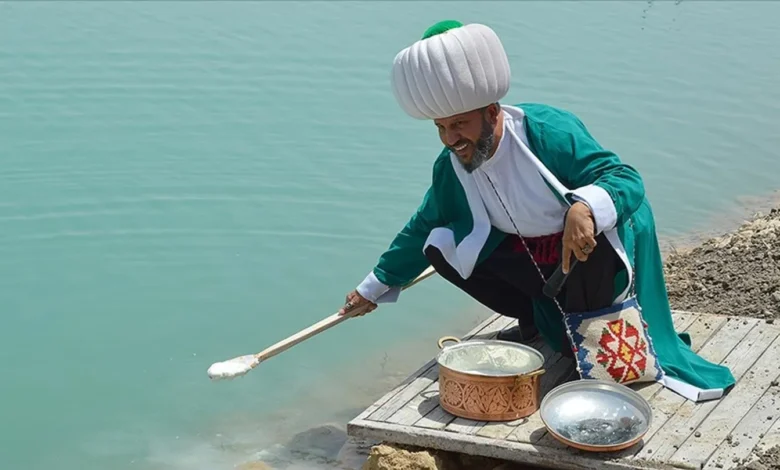
As Konya’s Akşehir hosts the 66th International Nasreddin Hodja Festival, scholars, artists, and storytellers from around the world are gathering to honor the legendary satirist whose wit, wisdom, and timeless humor continue to resonate across continents—800 years after his birth.
Through theatrical performances, academic panels, and open-air storytelling sessions, the festival pays tribute to Nasreddin Hodja, a beloved figure whose tales, often absurd on the surface, contain deep truths about justice, humility, and human nature.
In the heart of central Anatolia, in the town of Aksehir where the dusty earth meets the shimmering silhouette of Mount Sultan, stories echo through the streets with laughter—a familiar sound that spans generations. This is the hometown of Nasreddin Hodja, and the 66th International Nasreddin Hodja Festival is in full celebration.
The festival, which opened on July 5 with a traditional town crier’s proclamation, features ten vibrant days of music, theater, satire, and cultural exhibitions. Actor Altan Erkekli, renowned for his portrayal of Hodja, was honored with the prestigious “Golden Turban” award at the opening ceremony.
Attendees are immersed in local music, folk performances, puppet shows, and interactive storytelling sessions that celebrate Hodja’s legacy. The festival has recently become a member of the European Association of Folklore Festivals, reflecting its expanding international impact and commitment to cultural dialogue.
More than a tribute, this year’s event affirms that Nasreddin Hodja’s legacy is a dynamic cultural force, not merely a historical curiosity. As a 13th-century satirist with a mysterious biography but enduring presence, Hodja’s tales blend humor with sharp social critique, encouraging introspection and empathy.
His stories have traveled across centuries and regions, embedding themselves into cultures from the Middle East to South Asia. The earliest known documentation dates back to 1485, yet he had long lived through oral tradition. In 2022, UNESCO recognized him as part of humanity’s intangible cultural heritage.
Associate Professor Ebru Senocak of Firat University calls Hodja a “cultural phenomenon,” emphasizing his unique ability to use humor as both a teaching tool and a mirror to society. In Turkish, the term “Hoca” denotes a respected teacher or sage, and Hodja embodies this wisdom with disarming humor.
Hodja’s tales—like feeding soup to his coat or riding his donkey backward—challenge vanity, hypocrisy, and rigid thinking. They are not only comedic but serve as insightful critiques, inviting listeners to reconsider their assumptions.
His universality is evident in the various forms his persona has taken across cultures. Known as Molla Nasreddin in Azerbaijan, Nasirdin Ependi in China, Apendi in Kyrgyzstan, and Juha in Arab countries, he seamlessly blends into each society, never appearing foreign.
Professor Zekerya Batur of Usak University notes that Hodja’s genius lies in his use of absurdity to reveal deeper truths. Like his contemporaries Mevlana Rumi and Yunus Emre, Hodja emerged from a period of upheaval, offering clarity through wit rather than poetry or mysticism.
Today, modern authors like Dr. Melike Gunyuz are reimagining Hodja’s tales for children, ensuring his stories resonate with younger audiences. Her book, already translated into multiple languages, presents a cohesive narrative drawn from classic anecdotes, allowing children to connect with the humor and wisdom of Hodja.
Gunyuz views Hodja as both a joyful public figure and a scholarly observer of his time. His tales offer insights into social dynamics, economics, and everyday life, doubling as historical records. For her, the most powerful aspect of Hodja’s legacy is its transmission across generations.
Even Turkish idioms owe much to Hodja’s storytelling. Phrases like “ipe un sermek” (to stall) or “Yorgan gitti, kavga bitti” (The quilt is gone, the fight is over) are direct descendants of his wit.
As the Aksehir festival continues, Hodja remains deeply relevant. In a divided world, his stories serve as reminders of our shared flaws and the unifying power of laughter. “Through his anecdotes, Nasreddin Hodja offers snapshots of life where wisdom hides behind humor,” says Batur.
“He transformed laughter into light,” adds Senocak, highlighting Hodja’s lasting message: to think critically, live wisely, and always remember to laugh at ourselves.
And so, the donkey marches on—backwards yet forward—carrying not just a rider, but a timeless message about the world and our place within it.